Introduction to AI-Powered Advertising
Digital advertising has evolved dramatically over the past decade. What once relied heavily on manual audience targeting, campaign monitoring, and optimization is now being transformed by artificial intelligence (AI).
Today’s marketers face increasing pressure to deliver personalized experiences, maximize return on ad spend (ROAS), and manage campaigns across multiple channels simultaneously. AI-powered advertising platforms help solve these challenges by automating complex processes, uncovering valuable insights, and making data-driven decisions at scale.
As AI adoption continues to accelerate across marketing functions, businesses are increasingly investing in intelligent advertising technologies to improve performance, efficiency, and customer engagement.
What Is an AI Advertising Platform?
An AI advertising platform is a technology solution that uses machine learning, predictive analytics, automation, and data intelligence to manage, optimize, and scale advertising campaigns.
Unlike traditional ad management tools, AI-powered platforms continuously analyze performance data, identify patterns, and automatically adjust campaigns to achieve predefined goals such as:
- Increasing conversions
- Improving click-through rates (CTR)
- Reducing acquisition costs
- Maximizing return on ad spend
- Enhancing customer engagement
These platforms can manage millions of data points in real time, helping marketers make smarter decisions faster than manual processes ever could.
Why Businesses Are Adopting AI Advertising Solutions
The advertising ecosystem has become increasingly complex. Brands now engage audiences across search engines, social media, connected TV (CTV), mobile apps, retail media networks, and digital marketplaces.
Managing this level of complexity manually is difficult. AI advertising solutions help organizations:
- Process large volumes of campaign data instantly
- Identify high-value audience segments
- Optimize bids automatically
- Improve personalization at scale
- Predict future campaign performance
- Allocate budgets more efficiently
The shift toward AI-driven advertising is being fueled by the growing need for personalization, automation, and data-driven decision-making. According to research from McKinsey, AI has the potential to significantly enhance productivity across marketing and sales functions by enabling faster campaign optimization, deeper customer insights, and more personalized customer experiences. As advertising channels continue to multiply, businesses are increasingly turning to AI-powered platforms to manage complexity while improving campaign outcomes.
Essential AI Advertising Platform Features
Modern AI advertising platforms should provide a comprehensive set of capabilities that enable marketers to automate, optimize, and scale campaigns effectively.
1. Automated Campaign Management
Campaign management often involves repetitive tasks such as:
- Audience targeting
- Bid adjustments
- Creative testing
- Placement optimization
- Performance monitoring
AI automates these activities, reducing manual workload and allowing marketing teams to focus on strategy and creative development. Automated campaign management ensures that campaigns continuously adapt to changing market conditions and consumer behavior.
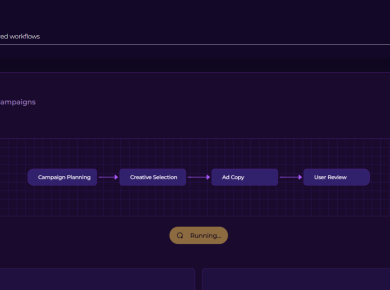
Advanced AI advertising solutions are increasingly moving towards autonomous campaign management, where machine learning models continuously evaluate performance signals and recommend or execute optimizations at scale. Platforms are built around this intelligence-driven approach, enabling marketers to streamline campaign operations, reduce manual effort, and maintain consistent performance across dynamic advertising environments.
2.Audience Segmentation
One of AI’s strongest capabilities is identifying patterns within customer data.
Rather than relying solely on demographic information, AI platforms can create dynamic audience segments based on:
- Behavioral signals
- Purchase history
- Engagement patterns
- Website interactions
- Predictive intent signals
This level of intelligent segmentation is becoming increasingly important as brands compete to deliver more relevant customer experiences. AI can analyze vast datasets and uncover audience patterns that would be difficult for marketers to identify manually, helping advertisers create highly targeted campaigns that drive stronger engagement and conversion rates.
3.Predictive Analytics
Predictive analytics uses historical and real-time data to forecast future outcomes.
For advertisers, this means being able to predict:
- Conversion likelihood
- Customer lifetime value
- Churn risk
- Audience engagement potential
- Campaign performance trends
Predictive analytics has become one of the most valuable applications of AI in advertising because it enables marketers to anticipate customer behavior before it occurs. Rather than reacting to performance trends after the fact, businesses can proactively adjust targeting strategies, budgets, and creative messaging based on forecasted outcomes.
Campaign intelligence platforms further strengthen these capabilities by transforming performance data into actionable insights, allowing marketers to identify trends, evaluate campaign health, and make more informed strategic decisions.
4.Real-Time Optimization
Consumer behavior changes constantly.
An effective AI advertising platform continuously monitors campaign performance and automatically adjusts variables such as:
- Bidding strategies
- Audience targeting
- Creative combinations
- Channel allocation
- Budget distribution
Real-time optimization helps advertisers capture opportunities as they emerge while minimizing underperforming spend.
Alongside media optimization, modern AI platforms are also bringing intelligence into the creative process. Creative intelligence solutions help advertisers understand how different creative elements contribute to performance, enabling faster testing, refinement, and optimization of assets based on data-driven insights.
5.Cross-Channel Advertising
Consumers rarely interact with brands through a single channel.
They may discover a product through social media, research it via search, and complete a purchase through an app or website.
AI advertising platforms help unify these touchpoints by managing campaigns across:
- Search advertising
- Social media advertising
- Display advertising
- Programmatic advertising
- Connected TV (CTV)
- Retail media networks
Cross-channel visibility enables a more consistent and cohesive customer experience. Today’s customer journey is rarely linear. Consumers often interact with brands across multiple touchpoints before making a purchase decision. AI-powered advertising platforms help marketers unify these interactions, creating more cohesive cross-channel experiences while improving attribution and measurement capabilities.
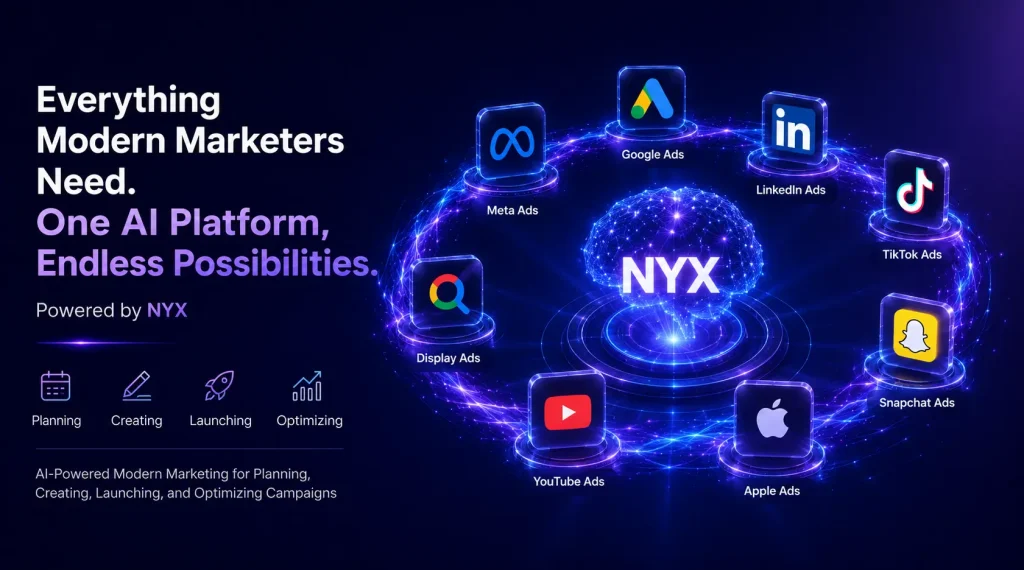
Cross-channel orchestration platforms address this need by bringing together insights from diverse advertising ecosystems, helping marketers create more connected customer journeys and improve performance across channels.
5.Smart Budget Allocation
Budget allocation has traditionally been one of the most difficult aspects of advertising. AI helps by automatically directing spend toward channels, audiences, and campaigns delivering the highest performance. Instead of relying on periodic manual reviews, marketers can leverage AI to optimize budget distribution continuously, ensuring resources are invested where they generate the greatest impact.
As advertising budgets face increasing scrutiny, AI-driven budget optimization is helping marketers maximize efficiency by automatically shifting spend toward the highest-performing audiences and channels. This reduces wasted ad spend while improving overall return on investment.
6.Performance Forecasting
Forecasting enables marketers to anticipate future outcomes before launching or scaling campaigns.
Advanced AI advertising platforms can estimate:
- Expected impressions
- Click-through rates
- Conversion volumes
- Revenue potential
- Return on ad spend
These insights help teams plan more effectively and reduce uncertainty when making investment decisions.
With the help of campaign intelligence and advanced analytics platforms, marketers can move from simply reporting past performance to anticipating future opportunities, enabling more proactive planning and strategic decision-making.
How AI Improves Advertising Efficiency
Efficiency is one of the primary reasons organizations adopt AI advertising technology. AI improves efficiency by:
- Automating repetitive campaign tasks
- Reducing manual optimization efforts
- Accelerating data analysis
- Improving audience targeting accuracy
- Enhancing personalization at scale
- Identifying performance opportunities faster
The ability to automate repetitive campaign tasks while simultaneously analyzing large volumes of performance data is one of AI’s biggest advantages. Research from McKinsey suggests that AI can significantly improve operational productivity, allowing marketing teams to dedicate more time to strategy, creativity, and customer engagement rather than manual campaign management.
Key Benefits for Brands and Agencies
For Brands
Brands benefit from:
- Better targeting precision
- Higher campaign performance
- Improved customer experiences
- Faster decision-making
- Greater marketing scalability
For Agencies
Agencies gain:
- Increased operational efficiency
- Faster campaign deployment
- Enhanced reporting capabilities
- Improved client outcomes
- More time for strategic consulting
AI helps both brands and agencies shift from manual execution to strategic optimization.
Common Challenges and How to Overcome Them
Data Quality Issues
AI systems depend on high-quality data.
Solution: Establish strong data governance and ensure customer data is accurate, consistent, and regularly updated.
Integration Complexity
Many organizations use multiple marketing technologies.
Solution: Select platforms with robust integration capabilities and open APIs.
Lack of Internal Expertise
Teams may struggle to fully leverage AI capabilities.
Solution: Invest in training programs and partner with experienced technology providers.
Trust and Transparency Concerns
Some marketers hesitate to rely on automated decision-making.
Solution: Use platforms that provide explainable insights and transparent reporting.
How to Choose the Right AI Advertising Platform
Scalability: Can the platform support future growth and increasing campaign complexity?
Automation Capabilities: Does it automate campaign management, optimization, and reporting effectively?
Analytics and Reporting: Are insights actionable, transparent, and easy to understand?
Cross-Channel Support: Can the platform manage advertising across multiple channels from a unified interface?
Integration Flexibility: Does it integrate seamlessly with existing marketing technologies and data sources?
Security and Compliance: Does the platform meet industry standards for privacy, security, and data governance?
The right platform should align with your business goals, operational needs, and long-term growth strategy.
Future Trends in AI Advertising Technology
The future of advertising will be increasingly shaped by AI innovation.
Generative AI for Creative Production
Generative AI is transforming how creative assets are produced. Advertisers can now generate ad copy, images, video concepts, and campaign variations at scale, reducing production timelines while enabling faster experimentation. This allows marketing teams to test more creative approaches and personalize content for different audience segments with greater efficiency.
Autonomous Campaign Management
One of the most significant developments in AI advertising is the move toward autonomous campaign management. Emerging AI systems are increasingly capable of handling audience targeting, budget allocation, bid management, creative testing, and optimization with minimal human intervention. Industry leaders are investing heavily in this direction as they seek to simplify campaign execution while improving performance outcomes.
Predictive Customer Journeys
AI will provide deeper insights into customer behavior, enabling brands to anticipate needs before consumers express them.
Hyper-Personalization
Real-time personalization will continue advancing, allowing advertisers to deliver highly relevant experiences to individual users.
Industry leaders are already investing heavily in AI-driven advertising ecosystems, signaling that automation and intelligence will become central components of future marketing strategies.
Conclusion
AI advertising platforms are no longer optional tools reserved for large enterprises. They have become essential technologies for modern marketers seeking to improve efficiency, increase performance, and deliver personalized customer experiences at scale.
From automated campaign management and audience segmentation to predictive analytics and real-time optimization, AI empowers brands and agencies to make smarter decisions with greater speed and accuracy.
The rapid investment in AI by major technology companies and advertisers highlights the growing importance of intelligent automation across the advertising ecosystem. As platforms continue to evolve, marketers who successfully combine AI-driven insights with human creativity will be best positioned to deliver stronger customer experiences and sustainable business growth.
As advertising ecosystems become more complex, organizations that embrace AI-powered advertising solutions will be better positioned to adapt, compete, and grow in an increasingly data-driven marketplace.
Sources: Reuters, McKinsey, Business Insider
FAQs
- What is an AI advertising platform?
An AI advertising platform uses artificial intelligence and machine learning to automate, optimize, and manage digital advertising campaigns across multiple channels.
- How does AI improve advertising performance?
AI improves performance by automating optimization, identifying high-value audiences, predicting outcomes, and continuously adjusting campaigns based on real-time data.
- Can small businesses benefit from AI advertising platforms?
Yes. Many AI advertising solutions offer scalable features that help small and mid-sized businesses improve campaign performance without requiring large marketing teams.
- What features should I look for in an AI advertising platform?
Key features include automated campaign management, audience segmentation, predictive analytics, real-time optimization, cross-channel advertising, smart budget allocation, and performance forecasting.
- Is AI replacing marketers?
No. AI is enhancing marketers’ capabilities by automating repetitive tasks and providing actionable insights, allowing teams to focus on strategy, creativity, and customer relationships.
- What is the future of AI in advertising?
Future developments include autonomous campaign management, generative AI creative production, predictive customer journey mapping, and increasingly sophisticated personalization capabilities.

 NYX Today