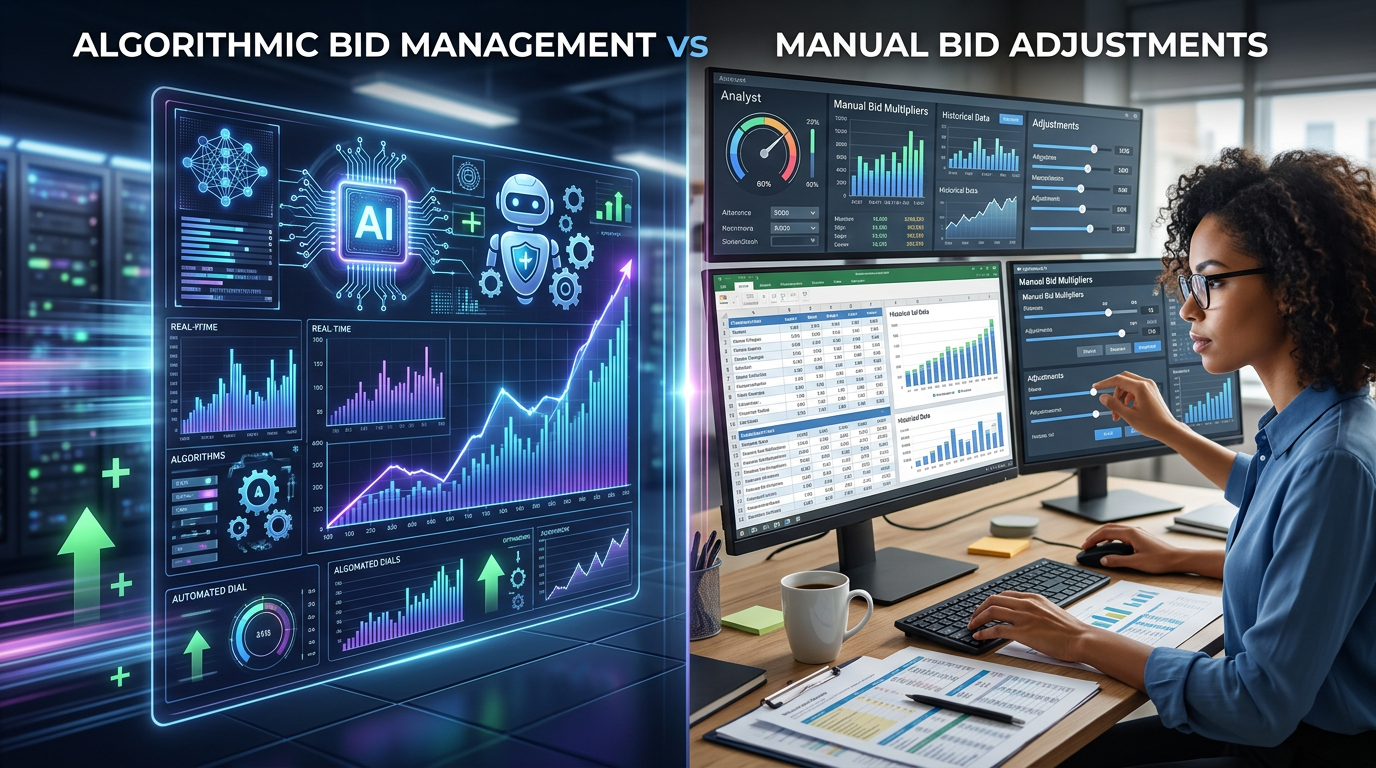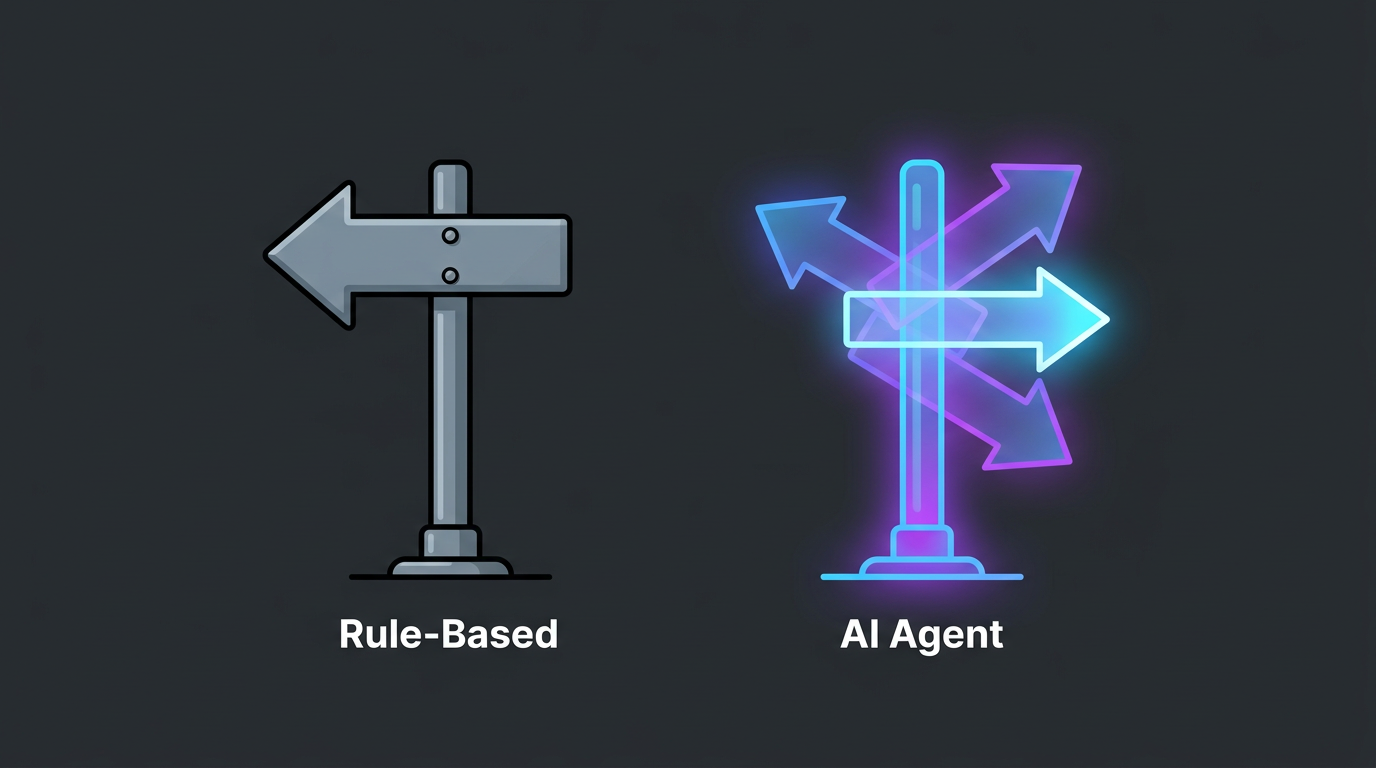
Rule-based campaign automation follows predefined instructions: when a condition is met, it triggers a specific action. An AI agent can assess context, choose an action, and adjust its approach toward a defined goal. Rule-based automation works best for predictable processes, while AI agents are more useful when campaign conditions change frequently.
Key Takeaways
Rule-based automation follows fixed if-then instructions.
AI agents evaluate information and choose actions based on a defined goal.
Automation is easier to predict, audit, and troubleshoot.
AI agents can handle more variable campaign situations.
The two approaches can work together rather than being mutually exclusive.
Define Both Options
What Is Rule-Based Campaign Automation?
Rule-based automation uses predefined conditions to trigger specific actions. For example, a campaign can pause when spend reaches a set limit or increase a budget when a performance threshold is met. It works well when decisions are predictable and the required actions can be clearly defined in advance.
What Is an AI Agent?
An AI agent works toward a defined objective by assessing information, deciding what action to take, and using available tools to execute that action. Unlike a fixed workflow, it can adapt its next step based on the situation.
For marketing teams, this can be useful when campaign performance depends on several changing signals rather than one predefined condition. Platforms such as NYX apply this approach to marketing workflows where ongoing decisions and optimization are required.
AI Agent vs Rule-Based Campaign Automation
Factor | AI Agent | Rule-Based Automation |
|---|---|---|
Decision-making | Assesses context and selects an action | Follows predefined conditions |
Adaptability | Can adjust to changing situations | Requires rule changes |
Consistency | Decisions can vary with context | Highly predictable |
Maintenance | Managed around goals and controls | Rules need updating as scenarios change |
Best for | Dynamic campaign decisions | Stable, repeatable tasks |
Oversight | Requires monitoring and guardrails | Easier to audit step by step |
Complex workflows | Can handle multi-step tasks | Can become difficult as rules multiply |
When to Use Each
Choose Rule-Based Automation If:
Rule-based automation is a good fit when your campaign process is stable and the desired action can be clearly defined. It is particularly useful when consistency, transparency, and straightforward troubleshooting matter more than adapting to unexpected conditions.
Campaign conditions rarely change.
Actions follow clear if-then logic.
You need predictable outcomes.
Compliance or approval requirements call for defined steps.
Your team wants simple auditing and troubleshooting.
Choose an AI Agent If:
An AI agent is better suited to campaigns where conditions change and decisions require more than a single predefined rule. It can evaluate multiple inputs and determine the next action within the objectives and limits set by the marketing team.
Campaign conditions change frequently.
Managing exceptions is becoming difficult.
Several signals influence each decision.
You want more flexible optimization.
Your team can provide appropriate oversight and controls.
FAQs
Can workflow automation do what an AI agent does?
Yes, for predictable tasks. But as situations become more varied, fixed rules require more maintenance. AI agents can assess context and determine the next action within a defined goal, making them better suited to workflows where the exact situation cannot always be anticipated.
How is an AI agent different from automation?
Rule-based automation executes instructions that have already been defined. An AI agent can evaluate the current situation, decide what to do next, and use available tools to complete a goal. The key difference is flexibility in decision-making, not simply whether a task is automated.
Is an AI agent less reliable than rule-based automation?
They offer different types of reliability. Rule-based automation is more predictable because the same conditions trigger the same actions. AI agents can respond to context but need clear goals, monitoring, and safeguards to keep their decisions aligned with business objectives.
When should I move from automation to an AI agent?
Consider an AI agent when rules are becoming difficult to maintain, exceptions require frequent manual intervention, or campaign decisions depend on several changing factors. If your existing automation is reliable and easy to manage, there may be no business reason to replace it.
Bottom Line
Choose rule-based automation if your campaigns are predictable and you value consistency, transparency, and simple maintenance. Choose an AI agent if campaign decisions depend on changing conditions and require more flexibility. For many marketing teams, the practical approach is to keep rules for stable tasks and use AI agents where context-based decisions add value.