Quick Answer
Autonomous campaign execution uses AI to manage campaign tasks and optimization with limited manual intervention, while a manual multi-channel launch relies on marketers to plan, configure, monitor, and adjust campaigns across each platform. Autonomous execution can improve speed and reduce repetitive work, while manual execution offers greater direct control over every campaign decision.
Key Takeaways
Autonomous execution: AI handles defined campaign tasks based on goals and constraints.
Manual launch: Marketers control setup, decisions, optimization, and changes across channels.
Speed: Autonomous execution can reduce repetitive setup and optimization work.
Control: Manual campaigns provide direct oversight of individual decisions.
Best approach: Many teams combine automation with human review for important decisions.
Define Both Options
What Is Autonomous Campaign Execution?
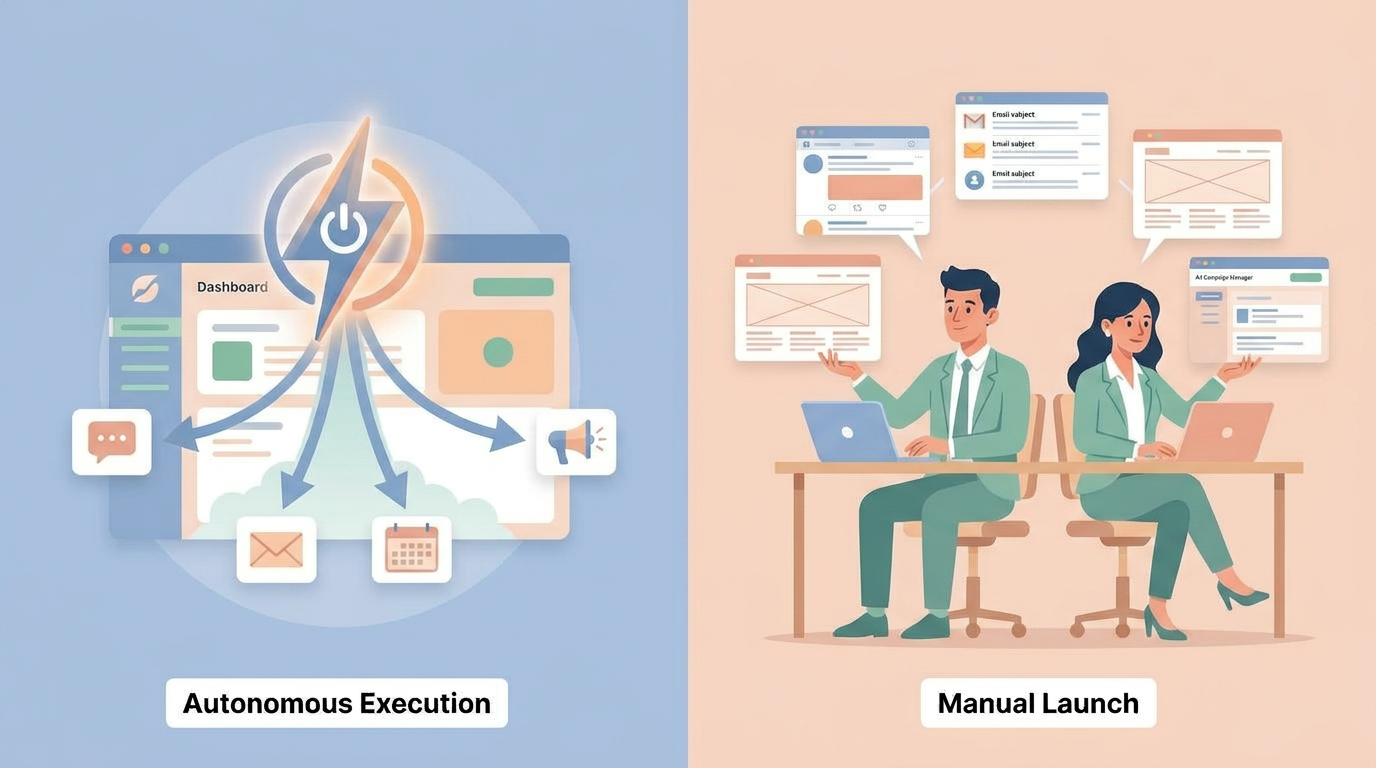
Autonomous campaign execution uses AI to carry out campaign tasks based on objectives, available data, and predefined limits. Depending on the platform, this can include campaign setup, budget adjustments, audience decisions, creative testing, monitoring, and optimization.
The marketer sets the direction and boundaries while the system handles more of the day-to-day execution. This approach is useful when campaigns require frequent adjustments rather than occasional manual changes.
What Is a Manual Multi-Channel Launch?
A manual multi-channel launch requires marketers to configure and manage campaigns separately across platforms such as Google, Meta, LinkedIn, or other advertising channels. Teams decide budgets, audiences, creatives, targeting, bidding, and optimization actions.
Manual execution provides detailed control, but it also means more repetitive work and coordination. As the number of channels and campaigns increases, maintaining consistency can become more difficult.
Autonomous Campaign Execution vs Manual Multi-Channel Launch
Factor | Autonomous Campaign Execution | Manual Multi-Channel Launch |
|---|---|---|
Campaign setup | AI can automate parts of setup | Marketers configure campaigns manually |
Optimization | Adjusts based on performance signals | Marketers review and make changes |
Speed | Faster for repetitive execution | Depends on team capacity |
Control | Human sets goals and limits | Human controls individual decisions |
Scalability | Easier to manage more campaign activity | Requires more manual effort as campaigns grow |
Consistency | Applies defined processes across campaigns | Depends on team processes |
Flexibility | Can respond to changing signals | Marketers can make nuanced decisions |
Oversight | Requires monitoring and safeguards | Direct human oversight |
Best for | High-volume, continuously changing campaigns | Strategic launches requiring detailed control |
When to Use Each
Choose Autonomous Campaign Execution If:
Autonomous execution makes sense when your team spends significant time managing repetitive campaign tasks or monitoring performance across multiple channels. It is particularly useful when campaigns need frequent adjustments and the business has clear objectives, budgets, and boundaries for the system to follow.
You manage campaigns across several channels.
Performance needs frequent monitoring and adjustment.
Your team has limited execution capacity.
You want to reduce repetitive campaign management.
You can define clear goals and controls.
Choose Manual Multi-Channel Launch If:
Manual execution is better when campaigns require close human judgment, detailed coordination, or careful control over every launch decision. It can be especially appropriate for new products, sensitive messaging, major brand launches, or campaigns where the strategy is still being tested.
You are launching a new product or market.
Messaging requires careful human review.
Campaign decisions depend heavily on business context.
You need direct control over each platform.
The campaign has unusual requirements that are difficult to standardize.
FAQs
Is autonomous campaign execution better than manual campaign management?
Not always. Autonomous execution is better for reducing repetitive work and responding quickly to changing campaign signals. Manual management provides more direct control and can be better for strategic, sensitive, or unusual campaigns. The right choice depends on campaign complexity, team capacity, and the level of oversight required.
Can AI launch and optimize campaigns without a marketer?
Some platforms can automate substantial parts of campaign execution, but human oversight remains important. Marketers should define objectives, budgets, brand requirements, and safeguards, then review performance and intervene when business conditions or campaign priorities change.
Does autonomous campaign execution reduce marketing costs?
It can reduce the amount of manual work required for campaign setup, monitoring, and optimization. However, the actual cost impact depends on the platform, campaign volume, existing team structure, and how much human oversight is still required.
When should a company switch from manual to autonomous campaign execution?
Consider the change when your team spends too much time on repetitive campaign management, runs campaigns across multiple channels, or needs faster optimization. If campaigns require frequent strategic decisions or close human control, a hybrid approach may be more appropriate.
Bottom Line
Choose autonomous campaign execution when your campaigns need frequent optimization and your team wants to reduce manual workload across channels. Choose manual execution when campaigns require close oversight, complex decisions, or a high level of control. For many teams, a hybrid approach works best: AI manages routine execution, while marketers guide strategy and review key decisions.