Building an AI marketing agent in-house means owning data pipelines, model behavior, and reliability for as long as the system runs. Buying means adopting a maintained platform and configuring it to your goals. For most B2B companies, buying gets to results faster and with less ongoing risk, unless AI marketing capability is genuinely core to what you sell.
Quick Comparison
Build: Full customization, full ownership of data pipelines and ongoing model maintenance.
Buy: Faster time to value, maintenance handled externally by the vendor.
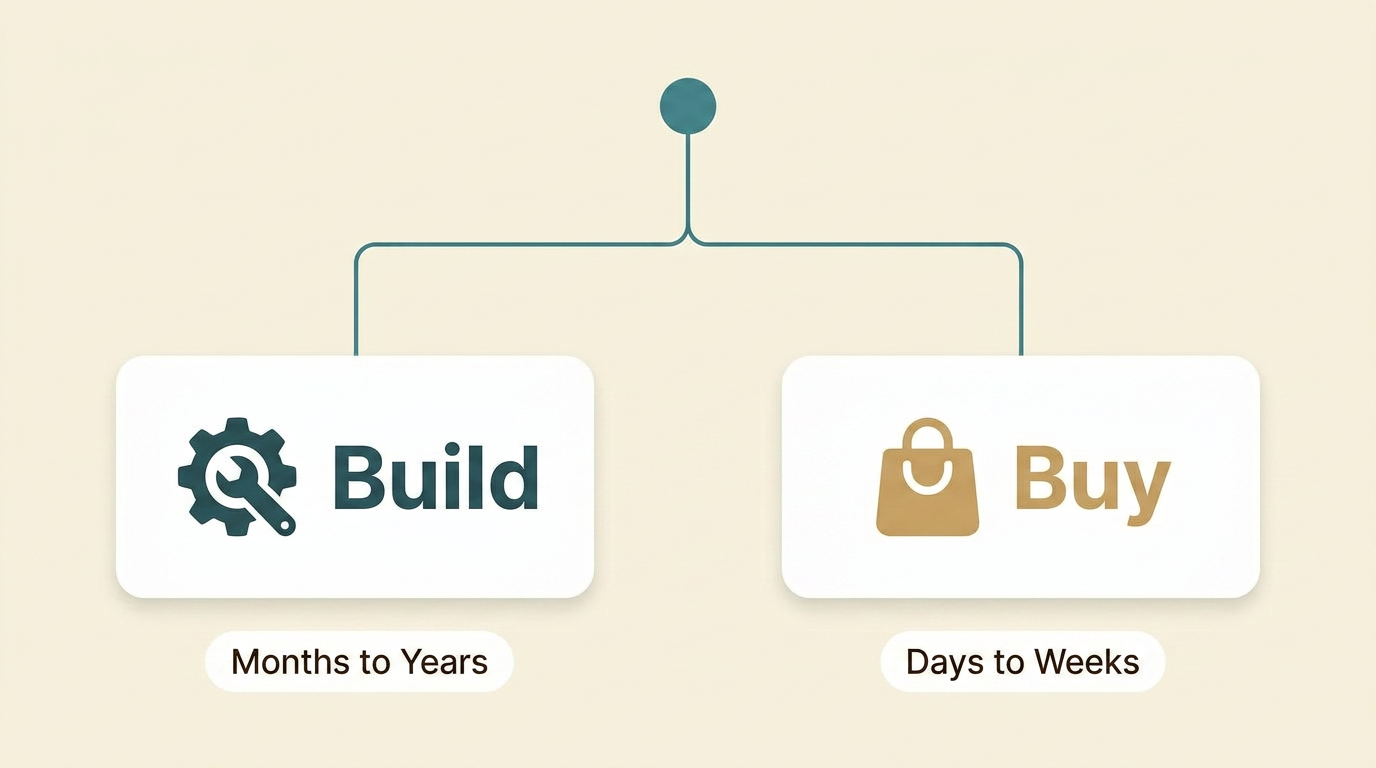
Best for speed: Buying, typically live in days to weeks.
Best for deep customization: Building, when requirements are highly specific.
Most companies buy first, then build custom components only for narrow, high-value gaps.
What Does Building an AI Marketing Agent In-House Involve?
Building in-house means your engineering or AI team designs, develops, deploys, and maintains the system that plans and executes marketing activities.
That can involve much more than building the AI itself. Your team may also need to manage:
Data pipelines and integrations
Campaign and customer data
Model selection and behavior
Testing and monitoring
System reliability
Security and access controls
Ongoing updates and maintenance
The advantage is control. You decide how the system works and can customize it around your exact requirements.
The tradeoff is that your team owns the entire technology lifecycle.
What Does Buying an AI Marketing Agent Involve?
Buying means adopting an existing AI marketing platform that is built and maintained by a vendor.
Instead of building the underlying technology, your team typically focuses on configuring:
Business goals
Marketing channels
Data connections
Campaign requirements
Permissions and guardrails
Reporting and optimization preferences
This can significantly reduce the time between selecting a solution and putting it into production.
The tradeoff is that customization is limited to what the platform supports, and your business becomes dependent on the vendor's product and roadmap.
Pros and Cons of Building In-House
Pros:
Fully customized to exact requirements
No dependency on a third-party vendor's roadmap
Can become a differentiator if AI marketing capability is core to your product
Cons:
Months to years before the system is production-ready
Ongoing engineering time for maintenance, monitoring, and retraining
Reliability and drift become your team's problem indefinitely
Pros and Cons of Buying
Pros:
Operational in days to weeks, not months
Maintenance, updates, and reliability handled by the vendor
Lower upfront engineering investment
Cons:
Customization limited to what the platform supports
Ongoing subscription or license cost
Some dependency on the vendor's product direction
Build vs. Buy: Side-by-Side
Dimension | Build | Buy |
|---|---|---|
Time to value | Months to years | Days to weeks |
Upfront cost | High engineering investment | Subscription or license cost |
Ongoing maintenance | Owned entirely in-house | Handled by the vendor |
Customization | Fully custom | Configurable within platform limits |
Risk | Reliability and drift are your problem | Vendor is accountable for the platform |
Practical Use Case: Six Months Into an In-House Build
Imagine a mid-market software company decides to build its own AI marketing agent.
Six months later, the core system works in a controlled demo. But production introduces new problems. A data source changes its schema, an integration needs updating, campaign data requires additional validation, and the engineering team now spends much of its time maintaining infrastructure instead of improving the product.
Meanwhile, another company chose an existing platform. It was operational within a few weeks and spent the following months configuring goals, connecting data, testing campaigns, and reviewing results.
The difference isn't necessarily the quality of the technology.
It's where the team spends its time.
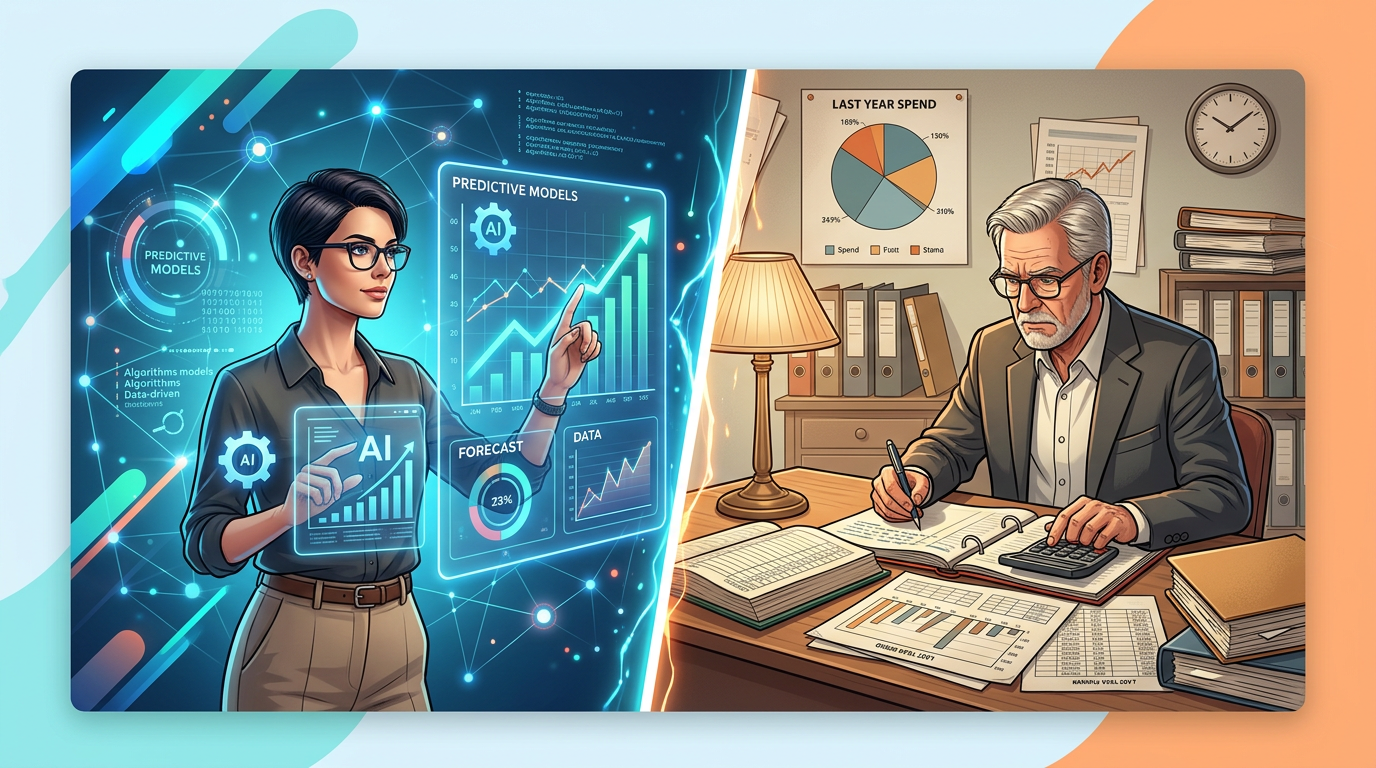
One team is building and maintaining marketing infrastructure. The other is using marketing infrastructure to improve campaign performance.
When to Build
Building may make sense when:
AI-driven marketing is a core part of your product or competitive advantage.
Your requirements are highly specific and existing platforms cannot meet them.
You have dedicated AI and engineering resources available for long-term ownership.
You need a level of control or customization that commercial platforms cannot provide.
The expected strategic value justifies the ongoing engineering investment.
Building should be treated as a long-term product or infrastructure decision, not simply another marketing technology project.
When to Buy
Buying may be the better option when:
You want marketing outcomes rather than an internal AI engineering project.
Your team doesn't have spare engineering capacity for ongoing maintenance.
You need to become operational in weeks rather than quarters.
Existing platforms already cover most of your marketing requirements.
Your priority is testing and improving AI-driven marketing rather than developing the underlying technology.
For most marketing teams, this is the more practical starting point.
FAQs
Is building ever cheaper than buying?
Rarely, once ongoing maintenance and retraining are counted alongside the initial build.
Can a team start by buying and build custom pieces later?
Yes, that's the most common pattern: buy for the core system, build only for narrow gaps.
How widespread is buy-side adoption of AI agents?
Gartner projects that 40% of enterprise applications will include task-specific AI agents by the end of 2026, most running on vendor platforms.
What's the most underestimated cost of building?
Ongoing model monitoring and retraining, which continues long after the initial launch.