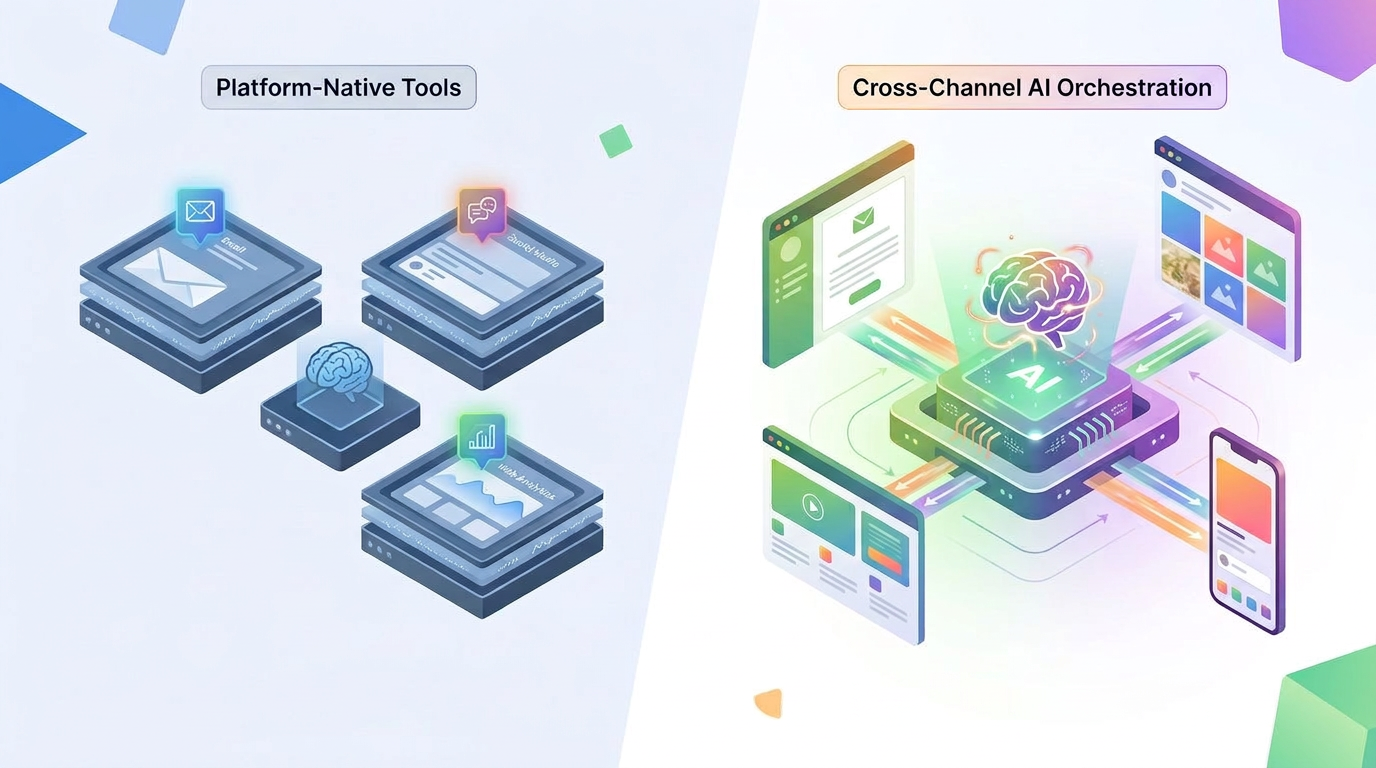
Cross-channel AI orchestration helps marketers manage and coordinate campaigns across multiple platforms from a unified view. Platform-native tools are built for specific channels and usually offer deeper controls. The better choice depends on whether your priority is managing campaigns together or getting more control within individual platforms.
Key Takeaways
Cross-channel orchestration: Brings campaign activity across multiple platforms together into one workflow
Platform-native tools: Focus on features and controls specific to individual channels
Coordination: A centralized approach makes it easier to manage activity across platforms
Specialization: Native tools can provide more detailed channel-specific capabilities
Practical choice: Many teams use both, depending on the campaign and channel
What Is Cross-Channel AI Orchestration?
Cross-channel AI orchestration uses AI to coordinate marketing activity across platforms such as Google Ads, Meta, LinkedIn, and other channels. Instead of managing each platform separately, marketers can work toward shared goals and use a more unified workflow.
This can be useful when decisions in one channel affect another, such as shifting budget based on overall campaign performance. Orchestration platforms help marketers coordinate messaging, timing, and budget across channels more effectively than managing each platform independently. Orchestration platform research shows measurable coordination benefits.
What Are Platform-Native Tools?
Platform-native tools are the advertising and marketing features provided directly by each platform. Google Ads, for example, offers tools for managing campaigns within Google's advertising ecosystem, while Meta provides its own campaign management features. These tools often provide detailed controls because they are designed specifically for their own platforms and their unique advertising capabilities.
Cross-Channel AI Orchestration vs Platform-Native Tools
Factor | Cross-Channel AI Orchestration | Platform-Native Tools |
|---|---|---|
Scope | Multiple marketing channels | Individual platforms |
Management | Centralized workflow | Managed within each platform |
Channel depth | Broader functionality | Deeper platform-specific features |
Budget decisions | Can consider multiple channels | Focuses on its own platform |
Reporting | Broader campaign view | Detailed channel-level reporting |
Setup | Requires connecting platforms | Usually available within the platform |
Control | Centralized management | Detailed channel controls |
Best for | Multi-channel campaigns | Channel-focused campaigns |
When to Use Each
Choose Cross-Channel AI Orchestration If:
A centralized approach makes sense when your team manages several advertising platforms and spends too much time moving between them. It can help bring campaign activity, performance signals, and budget decisions into a more connected workflow.
Teams spend too much time switching between platforms
Budget decisions depend on results from multiple channels
You want a broader view of campaign performance
Coordination matters more than deep channel-specific control
The leading platforms excel at connecting data and decisions across different advertising channels, making coordination seamless and efficient. Compare orchestration platforms to find the right fit.
Choose Platform-Native Tools If:
Native tools are a better fit when one channel is particularly important to your business or you need detailed control over how campaigns run there. They can also work well when your team has strong expertise in a specific advertising platform.
One or two platforms drive most of your results
You need advanced channel-specific controls
Your team has strong platform expertise
You need features closely integrated with a specific channel
Managing multiple platforms is not a major challenge
Deep channel expertise and specialized tools often deliver better results when a single channel is core to your business.
Integration Strategy: Native Tools Within Orchestration
Many sophisticated marketing teams combine both approaches. An orchestration platform coordinates budget, timing, and messaging across channels, while native tools handle channel-specific optimizations within that broader strategy.
Example workflow: An orchestration platform decides to shift budget from Meta to Google based on overall ROI. Then, native Google Ads tools optimize bid strategies and keyword selection within that increased budget.
Hybrid implementations using orchestration for coordination and native tools for channel depth deliver superior performance compared to single-approach strategies.
FAQs
Is cross-channel AI orchestration better than native tools?
Not necessarily. A centralized approach is useful for coordinating several channels, while native tools provide deeper control within individual platforms. The right choice depends on your campaign structure, team skills, and how much cross-channel coordination you need. Many teams benefit from both.
Can AI orchestration replace native advertising tools?
Usually, it works alongside them rather than replacing them completely. A centralized system can help coordinate campaigns, while native platforms may still be needed for detailed settings, reporting, and channel-specific features. The combination of both is often stronger than either alone.
What is the main benefit of managing campaigns across channels with AI?
The main benefit is better coordination. Instead of looking at each channel separately, marketers can compare performance across platforms and make broader decisions about budgets, campaigns, and priorities. This cross-channel visibility often reveals opportunities that single-channel views miss.
When should I use native platform tools?
Use them when you need detailed control over a specific channel, rely heavily on that platform, or need features designed specifically for its advertising environment. They are also a good fit when your team already has strong channel expertise and can extract maximum value from channel-specific capabilities.
Bottom Line
Use a cross-channel approach when managing several platforms is becoming time-consuming and you need a broader view of performance. Use native tools when detailed channel control is more important. For many teams, combining the two works well: coordinate campaigns centrally while using each platform's native features where deeper control is needed. The best marketing operations balance centralized coordination with channel-specific capabilities neither approach alone maximizes results.