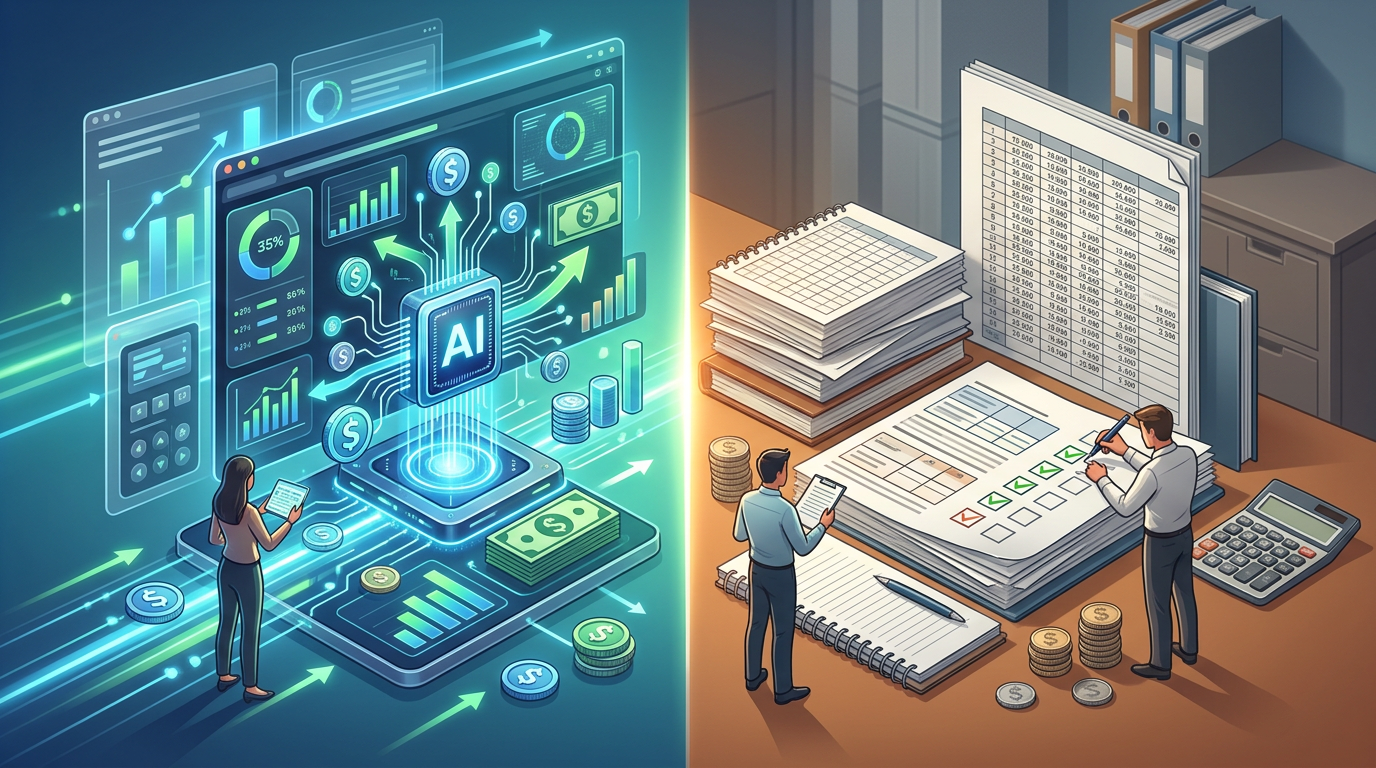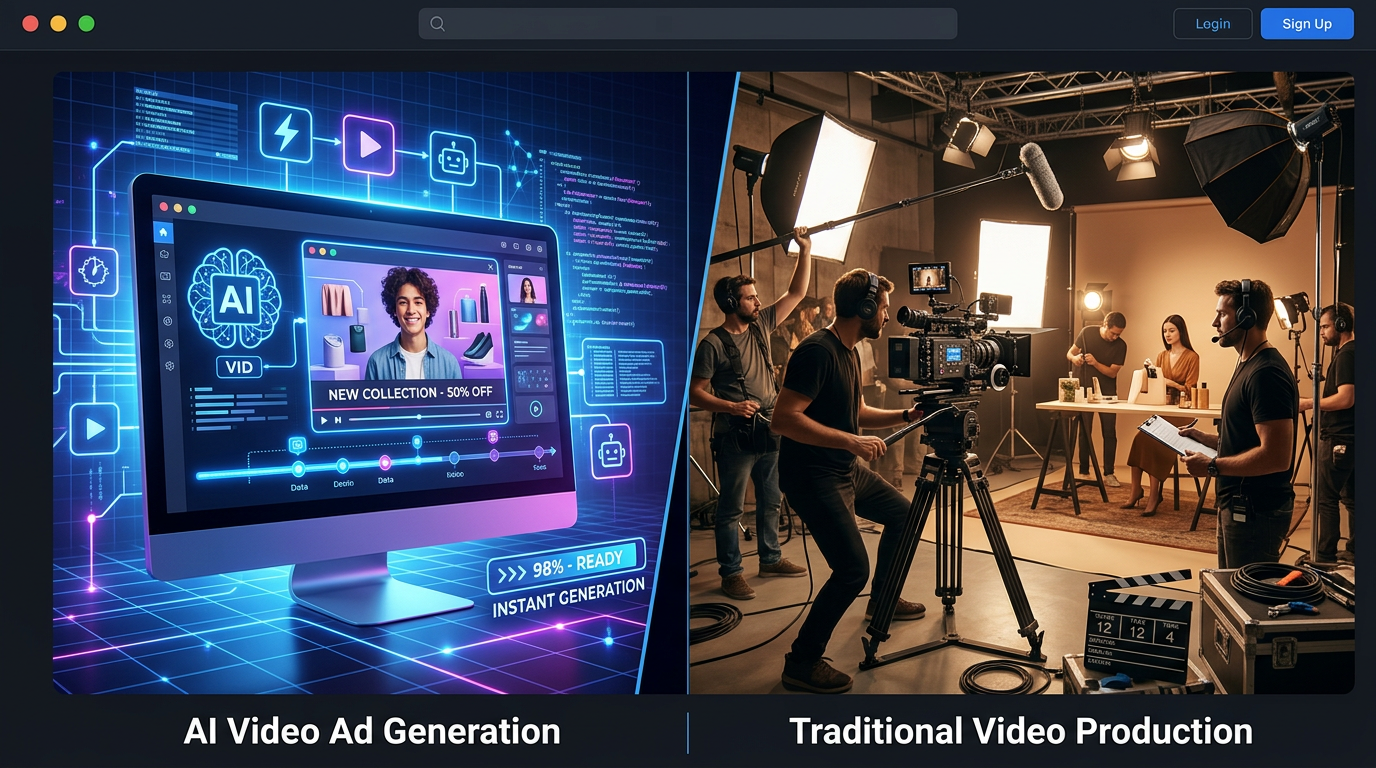
Comparisons of AI video ad generation and traditional video production often focus on speed and cost, but the decision also depends on quality, rights, consent, and disclosure requirements. AI generation is well suited to high-volume iteration and localization, while traditional production remains valuable for hero assets, real people, and real-world settings. This comparison examines the key differences in timelines, cost structure, quality, rights, consent, and synthetic-content disclosure.
What AI Video Generation and Traditional Production Involve
AI video ad generation produces moving assets from prompts, product data, scripts, and existing brand footage. Depending on the tool, output ranges from animated product and text compositions through to fully synthetic scenes and presenters. Platforms built for advertising, such as NYX's AI video and ad creative generation, also handle the format variants each channel expects rather than producing a single master file.
Traditional video production is the commissioned route: brief, treatment, casting, location or studio, shoot, edit, grade, sound, and delivery. It produces original footage of real people, products, and places, with cleared rights attached.
The distinction that matters is not "human versus machine." Both involve people making creative decisions. The distinction is whether the footage is captured or generated, because that determines the cost curve, the timeline, and the clearance work.
Production Timeline and Speed Considerations
Traditional production's timeline is dominated by scheduling, not filming. Availability of a crew, a location, and talent is what sets the calendar; the shoot itself is often a single day. A straightforward brand video typically runs several weeks from brief to delivery, and most of that is coordination and approvals.
Generation removes the scheduling problem entirely. There is no crew to book, so the constraint moves to briefing, review, and revision. A first cut can exist the same day.
Where this changes the work is in what becomes affordable to try. Under a traditional model, a team commits to a concept before the shoot because reshoots are expensive. With generation, the concept can be tested in rough form before anyone commits budget to polishing it. The same shift showed up earlier in static creative, and the trade-offs there are covered in this comparison of AI-generated ad creative and in-house design teams.
One caution: same-day rendering does not mean same-day approval. If the brand runs a multi-stage legal and compliance review, that review still sets the real cycle time, and it becomes the bottleneck once production stops being one.
Cost Structure and Scalability
The useful comparison is not which route is cheaper for one video. It is how cost behaves as the number of videos grows.
Traditional production cost is largely fixed per shoot and rises with each additional concept, because each new idea usually means new footage. Cutting six edits from one shoot is inexpensive; shooting six different concepts is not.
Generated video inverts this. Setup work brand kit, templates, approved visual rules is front-loaded, and the marginal cost of the next variant is small. That is why the two routes suit different jobs: one produces a small number of high-value assets, the other produces many assets at a consistent standard.
For example, a brand launching across four markets with three product angles may need 12 video variants. Traditional production may require additional filming or post-production work to accommodate these variations, along with market-specific voiceovers and subtitles.
An AI-based workflow can allow approved creative structures to be adapted across markets more efficiently. However, the business value of producing additional variants ultimately depends on how effectively they are used for testing, personalization, or campaign optimization rather than simply increasing the number of assets.
Video Quality, Capabilities, and Limitations
Generated video is well suited to a defined range of applications, including product compositions on clean backgrounds, motion graphics, text animation, atmospheric B-roll, and short-form social content. These formats benefit from faster production cycles and do not typically require extended visual continuity.
However, generated video still has limitations in several areas. Close-up shots of hands and faces can produce visible inconsistencies. Physical materials such as fabric, liquids, and reflective surfaces may also behave unpredictably between frames.
Maintaining visual and narrative continuity across longer sequences remains another challenge, making generated video generally better suited to short-form assets than extended narratives.
The appropriate quality standard depends on the intended use. A short social ad may require a different level of visual fidelity than a video supporting a high-consideration purchase or a flagship brand campaign. Evaluate generated video against the expectations of its specific placement, audience, and business objective rather than against a generic technology demonstration.
Key Factors for Selecting a Video Production Approach
Production Factor | AI Video Ad Generation | Traditional Video Production |
|---|---|---|
Time from brief to first cut | Hours to a day | Two to six weeks, driven by scheduling |
Cost as concept count rises | Low marginal cost per additional variant | Rises with each new concept requiring new footage |
Real people, products, and places | Limited; synthetic or from existing footage | Native strength, captured on camera |
Format and aspect ratio variants | Generated as part of the output | Additional edit and delivery work |
Localization across markets | Fast; copy and voice swapped per market | Separate voiceover, subtitling, and often reshoots |
Rights and clearance work | Consent needed for any real likeness or voice used | Handled through standard contracts at booking |
Platform disclosure obligations | Required for realistic synthetic content | Generally not applicable to captured footage |
Best-fit use | Volume testing, refreshes, market variants | Hero films, brand launches, founder and customer stories |
Where AI Video Generation Delivers the Most Value
AI video generation can provide significant value in three areas: creative testing, content refreshes, and localization.
Testing. Video testing has traditionally been constrained by the time and production resources required to create multiple variations. Lower production effort makes it more practical to develop and test a larger number of creative variants. These variants can also provide more inputs for dynamic creative optimization and enable systems such as AI creative scoring to help prioritize which assets should receive testing budget.
Refresh cycles. Creative performance can decline as audiences are repeatedly exposed to the same assets. AI-generated variants can make it easier to produce new versions without restarting the entire production process. This can support more frequent creative refreshes and help teams respond to creative fatigue more efficiently.
Localization. Adapting video content for different markets can require changes to voiceover, on-screen text, visuals, and contextual elements. AI video generation can streamline these adaptations by enabling approved creative components to be modified for different languages, markets, and audience contexts.
NYX has also documented related applications in geo-targeted image generation. Managing these localized variants consistently across channels also requires an effective multi-channel advertising workflow.
When Traditional Video Production Is the Better Choice
Four situations still justify the shoot.
Anything built on a real person. Founder stories, customer testimonials, and expert explainers work because the viewer believes the person is real and speaking for themselves. A synthetic stand-in undermines the one thing the format is for.
Brand and campaign launches. These set the visual language everything else follows. Generation is good at working inside a system and weaker at establishing one.
Physical product at close range. Texture, material, scale, and how a product behaves in the hand are where generated footage most often looks subtly wrong, and it is exactly what a considered purchase depends on.
Regulated categories with claim-level scrutiny. Where every visual claim must be substantiated, captured footage of the actual product is simpler to defend than a generated approximation.
A reasonable pattern is one production investment per campaign cycle that establishes the look, with generated assets carrying the volume around it. Guidance on getting more out of the resulting assets is covered in this piece on optimizing video content for engagement.
The Bottom Line
AI video ad generation and traditional video production serve different production requirements rather than competing as universally better options. AI generation is well suited to high-volume iteration, creative refreshes, and market-specific variants, while traditional production remains valuable for hero assets, real people, and detailed product footage. The choice also depends on operational requirements, including rights and consent for likeness and voice, as well as disclosure requirements for synthetic content. Evaluating these factors alongside production speed, cost, and creative objectives can help teams select the most appropriate approach.