Healthcare e-commerce sits in a different category from most D2C paid marketing. The acquisition mechanics are similar on the surface, Shopping campaigns, social demand generation, remarketing, but the messaging environment is far more restrictive. Platforms actively police healthcare-adjacent advertising, and a single risky keyword or claim can get an ad account, a listing, or an entire app flagged.
That means healthcare e-commerce marketing has to balance three things simultaneously: acquisition performance, compliance with platform policy, and conversion quality. Getting the acquisition strategy right but the messaging wrong doesn’t just underperform, it can shut a channel down entirely. This is why messaging needs to be controlled deliberately and consistently across Google, Meta, and app store listings, rather than left to individual campaign managers to interpret case by case.
1. Start With Google Shopping
Shopping is the natural starting channel for healthcare e-commerce because it’s product- and feed-led rather than message-led. The product data does most of the work, which reduces the surface area for policy risk compared to open-ended ad copy.
Early Shopping campaigns should focus on building clean, reliable product-level performance data. That starts with optimizing the feed itself:
Product titles that are descriptive and policy-safe
Descriptions that avoid overstated or restricted claims
Images that are clear and compliant with platform image policies
Categories mapped accurately in Merchant Center
Feed attributes kept complete and consistent, since incomplete attributes are a common cause of disapprovals
2. Hyperlocal / Hyper-Promotion Campaigns
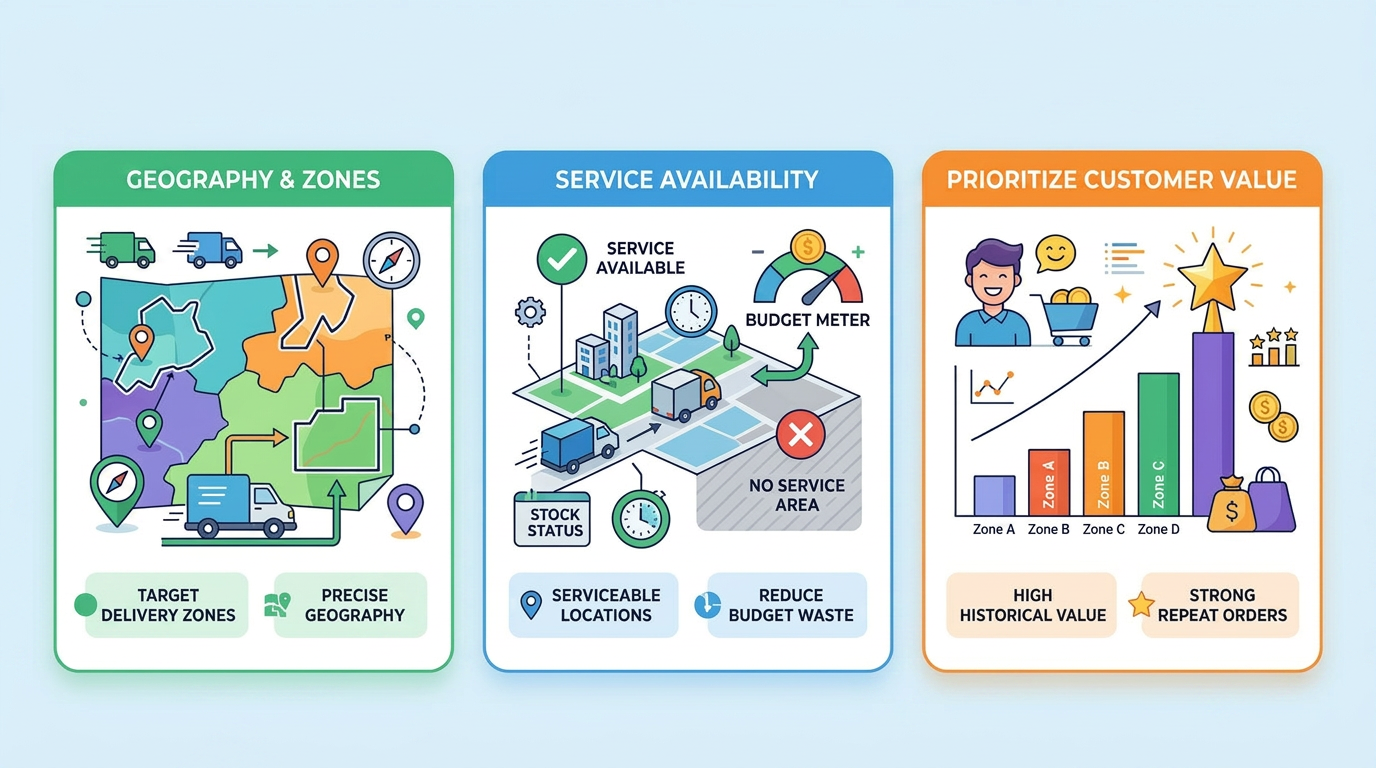
For healthcare e-commerce businesses that operate within specific serviceable areas, such as pharmacy delivery or local health services, hyperlocal campaigns are one of the most efficient ways to spend budget. There’s little value in bidding on demand you can’t fulfill.
Hyperlocal campaigns should be segmented based on:
Geography, matched precisely to serviceable delivery zones
Delivery or service availability, so budget isn’t wasted on areas where fulfillment isn’t possible
Customer value, prioritizing locations with stronger historical order values or repeat purchase behavior
As specific locations demonstrate strong conversion performance, budget should scale into those areas first, rather than spreading spend evenly across the full service footprint.
3. Product-Specific Callouts in Shopping
Shopping performance improves when relevant product- or service-specific callouts are used, giving shoppers more context before they click. Shopping annotations and assets can be used here where the platform supports them.
Every callout used should meet four conditions:
Clear, so the shopper immediately understands what’s being offered
Relevant to the specific product, not generic brand messaging
Policy-safe, avoiding any language that could trigger a health-claim review
Consistent with the landing page, so there’s no gap between what the ad promises and what the page delivers
4. Meta Strategy for Healthcare E-Commerce
Meta plays a demand generation and remarketing role in healthcare e-commerce, used within the boundaries of what the platform permits for health-adjacent advertisers. Where the business model supports ordering through WhatsApp, WhatsApp should be positioned as the primary call to action rather than a website checkout flow.
This works well operationally too: WhatsApp gives healthcare e-commerce businesses a lower-friction, higher-trust ordering path, and it keeps sensitive product conversations in a private channel rather than a public ad comment thread. WhatsApp-focused messaging should run consistently through the ad copy, the creative, the landing experience, and the conversion flow itself, so the user never has to guess where the journey leads.
5. WhatsApp-Focused Creative Structure
A well-built WhatsApp-led creative structure should include:
A clear call-to-action directing the user to order through WhatsApp
A simply explained customer journey, so there’s no ambiguity about what happens after they tap the CTA
Content callouts that reinforce convenience, availability, delivery timelines, and customer support
Throughout all of this, the creative should avoid unnecessary sensitive or restricted claims. It’s tempting to lean on specific health outcomes or medical terminology to build trust, but that’s exactly the kind of messaging that draws platform review and risks the ad account.
6. ASO: Messaging Matters
App store listings for healthcare products need the same messaging discipline as paid campaigns, arguably more, since app store policy reviews can result in listing removal rather than just ad disapproval.
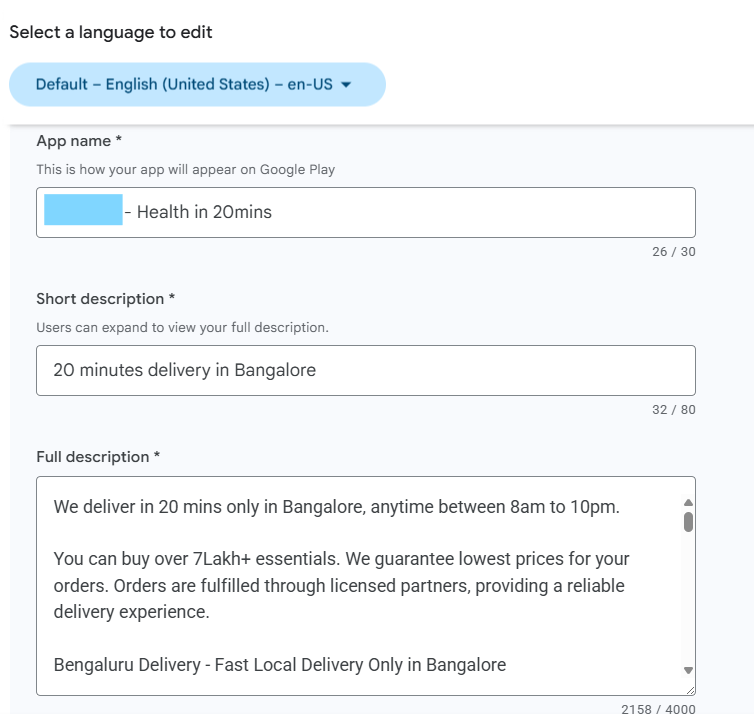
Keyword selection needs to be handled carefully throughout the listing. In particular, terms related to prescription and medicine are especially high-risk and should be avoided across the listing. These terms are best kept out of the top three to five primary messaging elements entirely, and specifically avoided in:
App name
Short description
Long Description
Key campaign messaging
7. Build ASO Around Safer Healthcare Keywords
Rather than pushing restricted terminology to try to rank for high-intent healthcare searches, ASO should be built around broader, safer positioning. Effective alternatives include:
Health essentials
Healthcare essentials
Health & wellness
Healthcare services
Convenient healthcare access
This kind of positioning still communicates the category clearly to the user and to app store search algorithms, without triggering the review flags that come with more clinical or prescription-adjacent language.
8. Campaign Headlines & Creative Messaging
The same keyword discipline used in ASO needs to extend into paid campaign headlines and creative. It’s a common oversight to keep the ASO listing clean while restricted terminology quietly creeps into ad copy instead. That inconsistency doesn’t reduce the risk, it just moves it to a different surface.
Headlines, descriptions, creatives, landing pages, and the app listing should all maintain the same consistent, policy-conscious positioning. If a term isn’t safe in the app title, it isn’t safe in the ad headline either.
9. Website + App + Paid Media Consistency
Each channel plays a distinct role, but they need to tell the same story:
Google Shopping carries product and service-level messaging
Meta drives WhatsApp-led conversion
ASO carries broader health and healthcare positioning
Maintaining this consistency across every surface, website, app, and paid media, keeps the brand experience coherent for the user while staying inside the boundaries platforms set for healthcare advertisers.
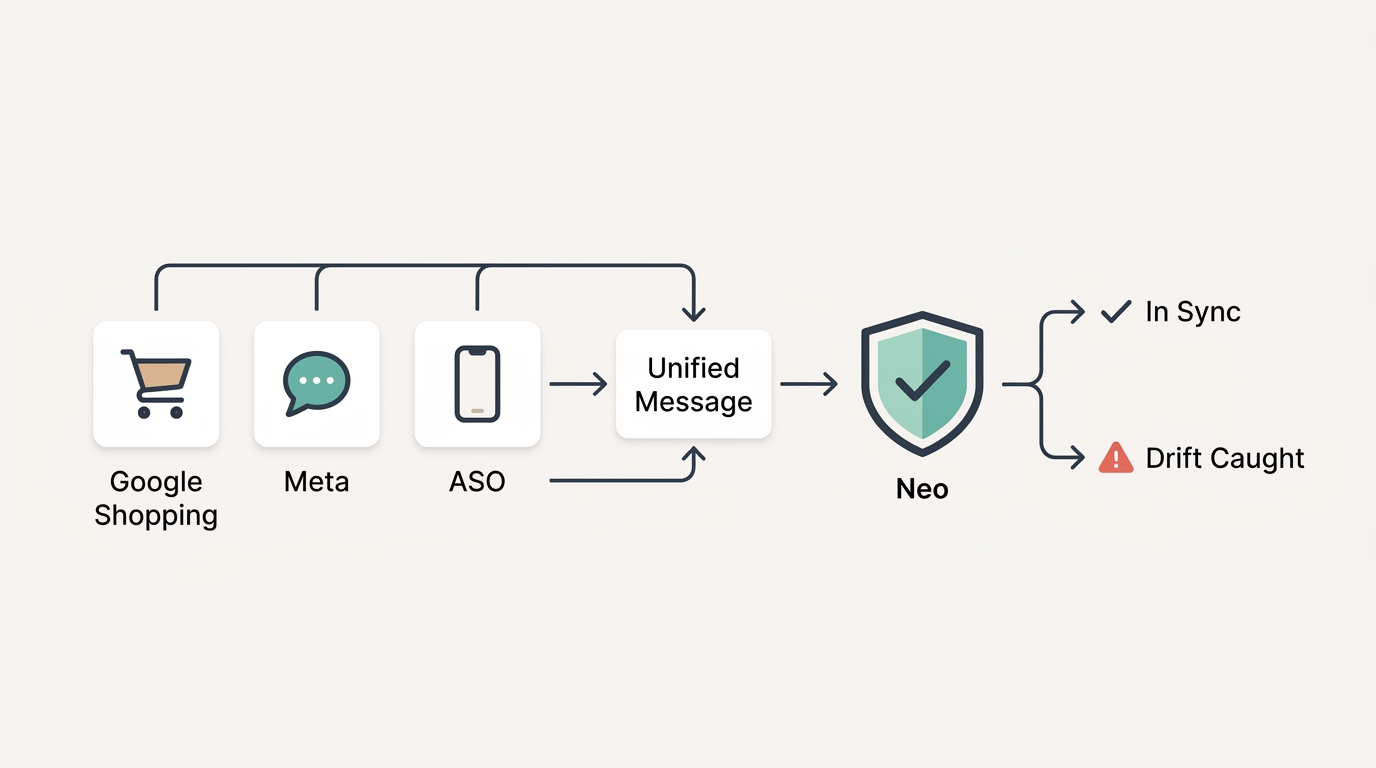
Keeping that consistency manually, across Shopping feeds, Meta creative, ASO listings, and landing pages, is where most healthcare teams lose the thread as campaigns scale. This is where a platform like NYX helps: Neo can flag when messaging drifts out of sync across channels (a restricted term slipping into ad copy after the ASO listing was cleaned up, for instance) before it becomes a compliance issue rather than after.
FAQs
1. Why start healthcare e-commerce acquisition with Shopping instead of Meta?
Shopping is feed-led rather than message-led, so the product data does most of the work. That reduces the surface area for policy risk compared to open-ended ad copy, and it builds clean product-level performance data early.
2. What makes hyperlocal campaigns important for healthcare e-commerce?
Many healthcare e-commerce businesses can only fulfill orders in specific serviceable areas. Hyperlocal campaigns segment by geography, delivery availability, and customer value so budget isn't spent chasing demand that can't actually be fulfilled.
3. Why is WhatsApp positioned as the primary CTA on Meta?
Where the business model supports it, WhatsApp gives a lower-friction, higher-trust ordering path and keeps sensitive product conversations private rather than public. Messaging across ads, creative, and the conversion flow should point consistently to WhatsApp rather than a generic website checkout.
4. Which keywords should be avoided in ASO and campaign messaging?
Terms related to prescription and medicine carry the highest policy risk and should be kept out of the app title, short description, headlines, and key campaign messaging. They're especially risky in the top three to five primary messaging elements of a listing.
5. What should I use instead of restricted healthcare terminology?
Broader, safer positioning: health essentials, healthcare essentials, health & wellness, healthcare services, or convenient healthcare access. This still communicates the category clearly without triggering platform review flags, and it should be applied consistently across ASO, ad headlines, and landing pages.
Key Takeaways
Start acquisition with Shopping, since it’s product-led and lower risk than open messaging.
Build hyperlocal campaigns wherever the business has defined serviceable areas.
Use WhatsApp as the clear, primary conversion path on Meta.
Keep ASO and campaign messaging policy-conscious across every element of the listing and creative.
Prioritize broader healthcare and health-essential positioning over restricted clinical terminology, especially prescription and medicine-related language.