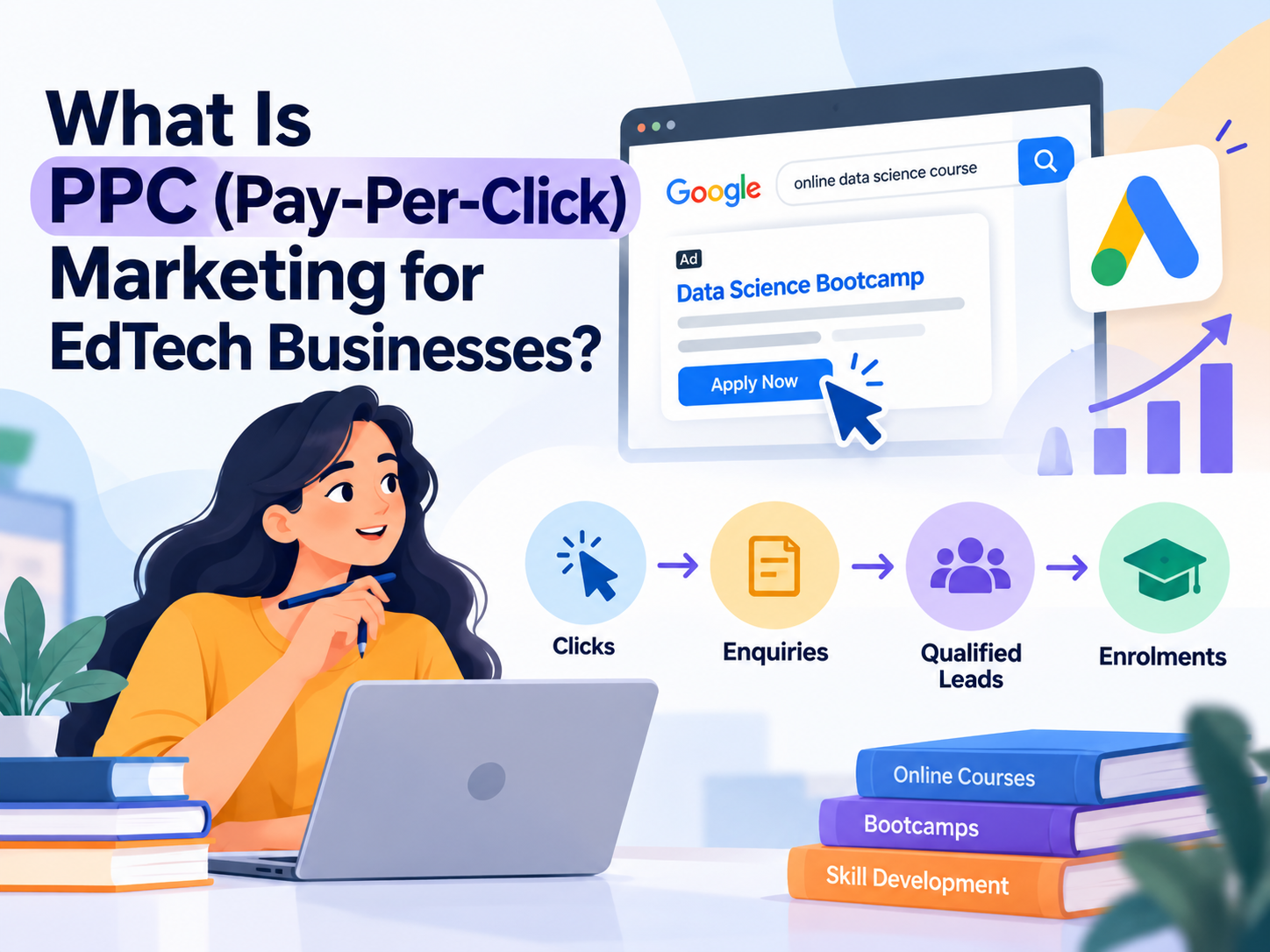
Pay per click, or PPC, is an advertising model in which an advertiser pays when someone clicks an ad. Google Search is the clearest example: a learner, parent or institutional buyer searches for a course or education solution; a relevant ad can appear; and the advertiser pays for the click. The click is only the start of the business outcome. An EdTech team should judge campaigns by qualified enquiries, applications, enrolments and economics, not by traffic alone.
PPC can capture existing demand quickly, test messages, and support launches. It also spends money quickly when the search intent, course page, or follow-up process is weak. The right question for a founder is not “What is our cheapest click?” but “How much can we pay to acquire a student or institutional account without damaging unit economics?”
How PPC Works in Practice
In a Google Search campaign, the advertiser chooses relevant keywords, locations, ads, destinations, budgets, conversion goals and bidding strategy. When someone searches, Google's auction considers eligibility and relevance alongside the bid and other factors. The advertiser can see impressions, clicks, cost, and track conversions. A keyword is a targeting instruction; a search term is what the person actually typed. Their difference explains why the search terms report deserves regular review.
Not every digital ad is literally charged per click. Some video, display, or social campaigns use different billing and optimisation models. Teams often use “PPC” loosely to mean paid digital acquisition, but a budget plan should state each platform's actual charge and goal.
EdTech Buying Journeys Are Different
A short exam preparation course may have a relatively fast decision. A degree programme or enterprise learning platform may involve repeated research, counsellor calls, fees, approvals and weeks or months of consideration. Parents may be involved even when students search. For institutional products, a CTO or procurement team may enter later. One form of fill does not mean the same thing across these offerings.
Define the valuable action for each offer. It may be a paid enrolment, verified application, scheduled counselling call, completed assessment, or sales-qualified institutional opportunity. Then work backwards to identify which earlier events predict that result.
Which Channels Fit Which Job?
Google Search captures explicit intent such as “data analytics bootcamp fees” or “learning management system for schools.” It is suitable for programme pages, admissions and high-intent comparison queries. YouTube and video can explain the course experience or demonstrate the product to people earlier in their research. Meta and other social channels can introduce an offer, build interest and retarget eligible visitors, but form quality can differ from Search. LinkedIn may fit enterprise education products where job role and organisation matter. Channel selection depends on the audience, product and measurement, not a generic ranking of platforms.
A Step-by-Step Launch Plan
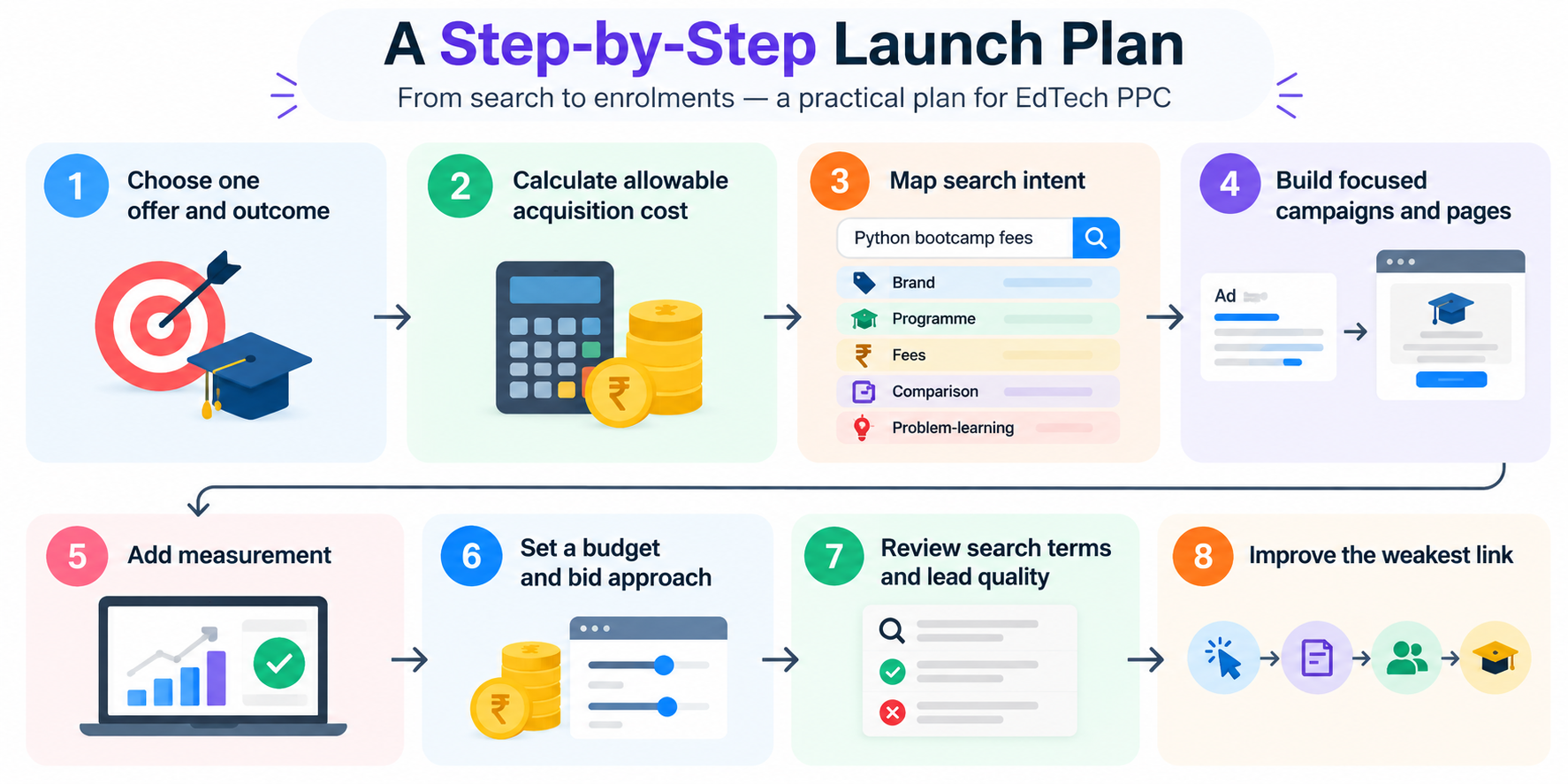
Choose one offer and outcome - For a coding bootcamp, identify the specific programme, intended applicant and enrolment definition. Do not blend unrelated courses in one generic lead goal.
Calculate allowable acquisition cost- Estimate net tuition after refunds and discounts, variable delivery and counselling costs, expected collection and target contribution. A simple illustrative ceiling is net contribution per enrolled learner multiplied by the portion leadership is willing to invest in acquisition. Replace assumptions with actual cohort data.
Map search intent - Separate brand, programme, fees, comparison and problem-learning queries. “What is Python?” is not as close to an application as “part-time Python bootcamp fees.” Both may have a role, but should not be judged by one CPL.
Build focused campaigns and pages. Group related terms by programme and intent; match the ad to a page with curriculum, eligibility, duration, pricing or a clear way to request details. Avoid sending a specific query to a generic homepage.
Add measurement. Track successful form submission or booking, not merely a button click. Connect the CRM so you can see qualified leads, applications and enrolments by source. Test the complete path on desktop and mobile.
Set a budget and bid approach. Start with an amount that can generate enough meaningful data for a decision without risking the whole acquisition budget. A bid strategy needs reliable conversion signals; changing targets every day makes interpretation difficult.
Review search terms and lead quality. Add irrelevant terms as negatives after checking their context. Review geography, device, schedule, page experience and actual counselling outcomes. Do not automatically exclude all broad educational queries if they contribute later in the journey.
Improve the weakest link. If clicks are relevant but forms do not arrive, inspect the page and offer. If forms arrive but no one qualifies, inspect messaging, targeting and form questions. If qualified leads arrive but few enrol, inspect speed and quality of follow-up and pricing objections.
Metrics That Matter To Leadership
CTR indicates whether users engaged with the ad, while CPC shows the cost of a click. Conversion rate and CPL connect clicks to enquiries. Cost per qualified lead, application and enrolled learner reveal whether the traffic becomes a viable customer. Contribution after acquisition is the final economic check. For an institution-focused offer, use opportunity value and sales-cycle stages with appropriate attribution caveats.
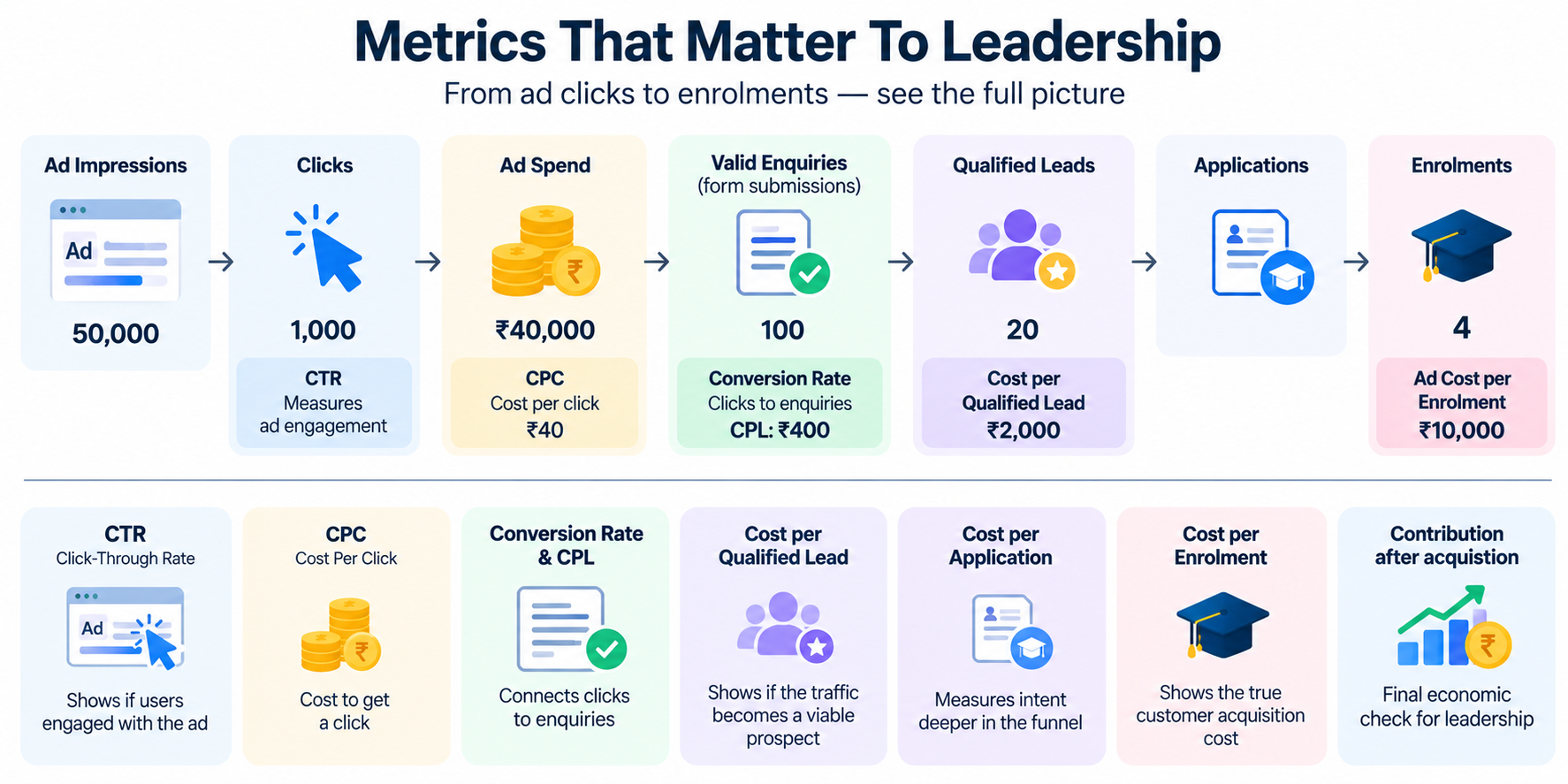
Illustration: 1,000 clicks at ₹40 cost ₹40,000. If 100 people submit a valid form, CPL is ₹400. If 20 meet qualification criteria, cost per qualified lead is ₹2,000. If four enrol, ad cost per enrolment is ₹10,000. These are hypothetical figures. They demonstrate why the ₹400 CPL alone is not enough to approve more spend.
Keep a consistent definition of “qualified.” A wrong number, duplicate or unrelated enquiry should not count. Distinguish a reachable prospect who fits the programme from someone who is ready to enrol. The CRM and campaign report should use the same stages.
Common Mistakes And How To Fix Them
Broad targeting with one generic page mixes intents. Optimising to every micro-action can teach bidding to find easy, low-value events. Hiding fees, prerequisites or duration may increase leads but lower the conversation rate. Slow follow-up wastes genuine interest. Looking at a single day's results can overreact to normal fluctuation and conversion lag. For minors, schools and sensitive data, review the applicable platform and privacy requirements before using audiences or forms.
NYX can help frame the operational point: a unified view of ad spend, enquiries and subsequent outcomes is useful when a team needs to decide which campaigns deserve budget. The data must be connected and stages defined before any dashboard recommendation is trusted.
When Is PPC Worth Investing In?
It is attractive when there is a clearly defined offer, a plausible pool of demand, a page that answers buyer questions, reliable conversion tracking and the ability to follow up. It is less useful as a shortcut for unclear positioning or an unready admissions process. Start with a bounded test, decide what success means in advance, and scale based on quality and economics.
A First Month Operating Rhythm
Before launch, the growth and admissions teams should agree on the programme, campaign geography, lead definition, follow-up owner and expected time from enquiry to outcome. During the first few days, verify that ads serve, queries are relevant, pages load and completed forms reach the CRM. Review accidental or irrelevant terms and obvious tracking failures promptly. This is a technical check, not a verdict on campaign profitability.
Each week, compare search themes and ads with valid enquiries, calls connected, qualified applications and reasons for loss. If admissions cannot contact many people, check form validation and follow-up speed before simply tightening keyword match. If applicants are suitable but decline over price, make the fee and financing information clearer and revisit the offer. If applications are strong but revenue has not arrived, allow for the cohort's normal decision period.
At month end, review mature enough leads by programme and channel. Separate brand searches, which may capture existing awareness, from non-brand discovery. Record changes made during the test. Decide whether to expand, improve the page, change messaging or stop a theme. A disciplined month produces an answer even when the campaign has not yet become profitable.
How To Evaluate A Landing Page
The page should answer the searcher's likely question before demanding personal details. For a course, show who it is for, curriculum, duration, delivery, fees or a clear pricing route, mentor support, assessment and the exact next step. Make evidence for career outcomes visible and qualified. The form should request only information needed to respond and assess fit. A short form may yield more enquiries; a longer form may reduce volume but improve screening. Test the trade-off against enrolled outcomes rather than assuming one format always wins.
Budget Allocation And Scale Decisions
Separate a protected learning budget from budget allocated to already-proven programmes. New terms need enough spend to produce information, but should not automatically receive the same allocation as a mature campaign. A useful planning sheet lists programme, expected cost per qualified applicant, expected application-to-enrolment rate, allowable cost per enrolment and current capacity. If the admissions team can handle only a limited number of enquiries, adding media spend may lower service quality rather than increase enrolments.
Scale in steps after verifying that the leads fit, the follow-up team can respond and the economics remain acceptable. Watch for a change in search-term mix as reach expands. If a campaign's spend rises but enrolment quality weakens, compare incremental results, not only the aggregate historical average. A business may reasonably accept a higher marginal acquisition cost to fill a cohort, but leadership should make that trade-off explicitly.
What Should A Founder Ask Before Increasing Spend?
Ask which programmes have sufficient delivery capacity and a clear contribution margin, what counts as an eligible applicant, and how fast the admissions team responds. Check the search terms and the page a prospective learner actually sees. If the campaign reports inexpensive leads but few qualified conversations, expanding budget will often enlarge the same problem. Fund the next test only after the team can show a working path from query to page to valid enquiry to enrolment. Document expected conversion lag so a cohort is judged after its normal admissions window.